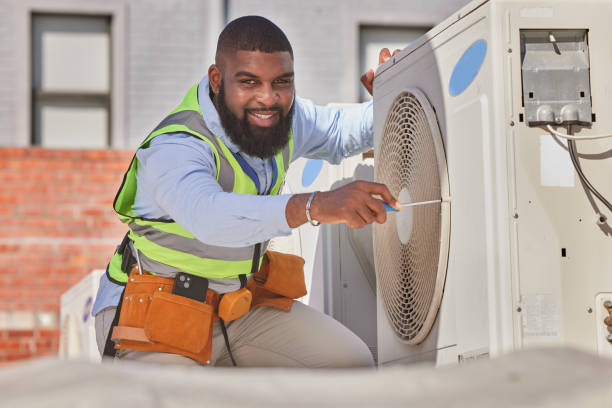
Why Professional Integrity Matters in Your Home
The HVAC industry is built on technical complexities that the average homeowner shouldn't have to master. Unfortunately, this knowledge gap is often exploited through opaque pricing and unnecessary upselling. At Justice AC, we believe that true professional excellence is found in the details that most people never see. An ethical service visit isn't just about getting the air blowing again; it’s about providing a reliable ecosystem of transparency and accountability.
1. Technical Evidence Over Verbal "Hunches"
An ethical technician never asks you to take their word for a part failure. They prove it.
- Multimeter Verification: If a capacitor or motor is failing, the professional should show you the exact microfarad or amperage reading on their meter.
- Manifold Pressure Data: Before suggesting a refrigerant "rescue," they should show you the subcooling and superheat data that proves the system is imbalanced.
- Photo Documentation: Ethical pros take "before and after" photos of internal components like evaporator coils or heat exchangers that you cannot see yourself.
2. The Absence of "Phantom Fees"
Transparency in pricing is the ultimate sign of professional integrity.
- Flat-Rate Quotes: You should receive a detailed, upfront quote before a single wrench is turned.
- No Hidden Surcharges: An ethical provider doesn't add "shop supplies" or "environmental fees" at the bottom of the invoice that weren't discussed initially.
- Itemized Accounting: Every part and labor hour should be clearly listed, ensuring you are paying for technical results rather than vague service calls.
3. Prioritizing Hardware Longevity Over Replacements
A common service mistake in the industry is pushing for a new system the moment a unit hits its tenth birthday.
- The "Repair-First" Mentality: An ethical pro looks for ways to extend your hardware's longevity through mechanical preservation.
- Honest Consultations: If your unit is 15 years old but a $150 contactor will keep it running safely, they should offer that repair as a valid option.
- The 50% Rule Advocacy: They use mathematical frameworks to help you decide when to replace, rather than high-pressure sales tactics.
4. Rigorous Cleanliness and Property Respect
Professionalism extends to how a technician treats your sanctuary.
- Protective Gear: Use of floor protectors (booties) and drop cloths isn't just about manners; it’s a sign of a disciplined technical protocol.
- Component Cleaning: An ethical maintenance visit includes cleaning the "hidden" parts—like the condensate drain pan or the secondary heat exchanger—that are essential for system hygiene.
- Workspace Restoration: Leaving the unit area cleaner than they found it shows that the technician values detail and accountability.
5. Comprehensive Commissioning Post-Repair
The job isn't done when the unit kicks on; it’s done when the performance is verified.
- System Re-Testing: After a repair, an ethical professional stays to measure the "temperature split" across the house to ensure the fix actually restored efficiency.
- Electrical Verification: They check the amp draw on the repaired component to ensure it isn't overworking the rest of the electrical ecosystem.
- Homeowner Education: They walk you through exactly what was done and provide service guidance on how to prevent the issue from recurring.
The Justice AC Standard
We believe that by looking for these five signs, you can avoid service mistakes and find a partner who truly cares about your indoor comfort. Professional transparency isn't just a goal—it's the only way to do business.